LZOS
(APM/TMB) 100/800 Review
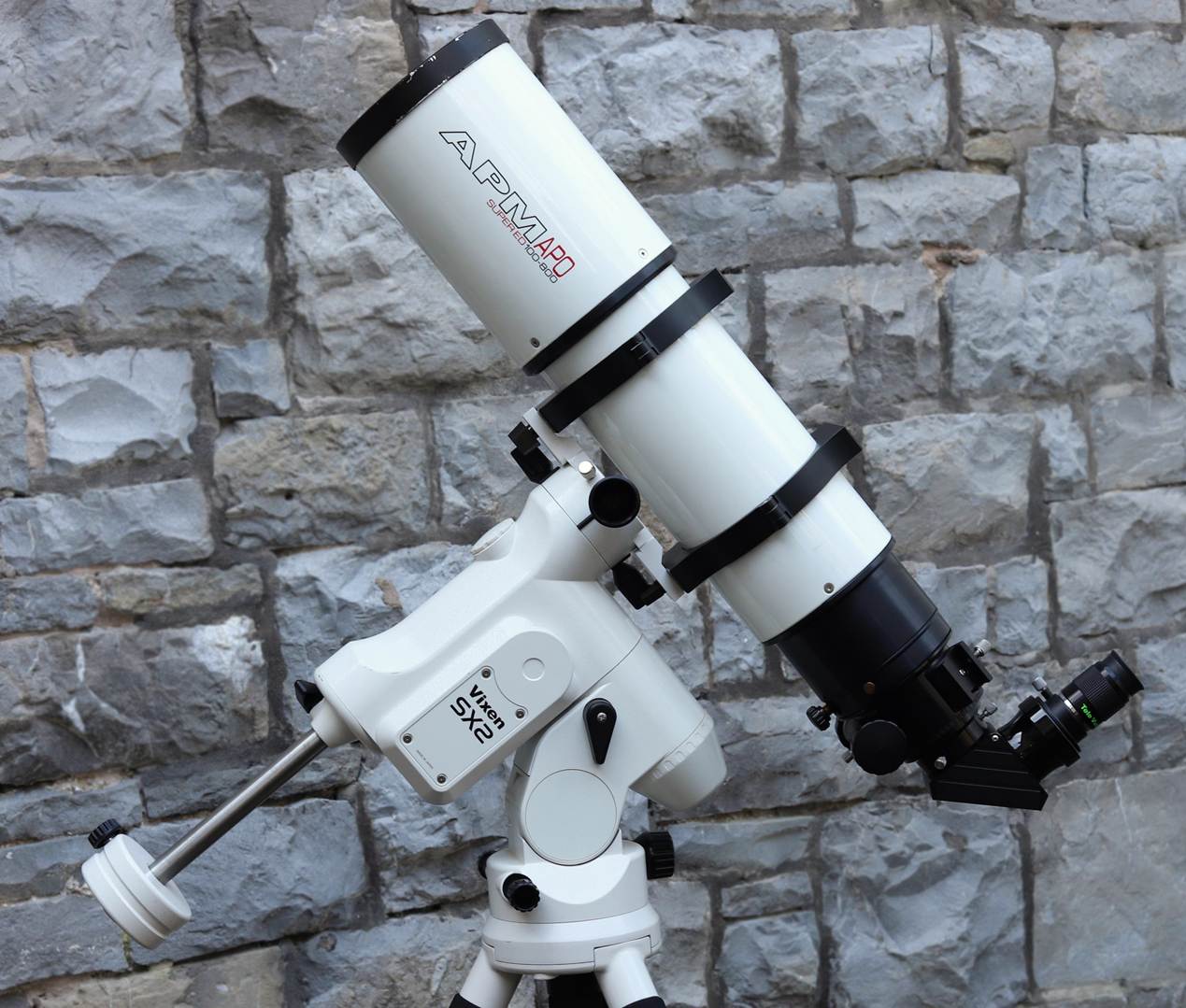
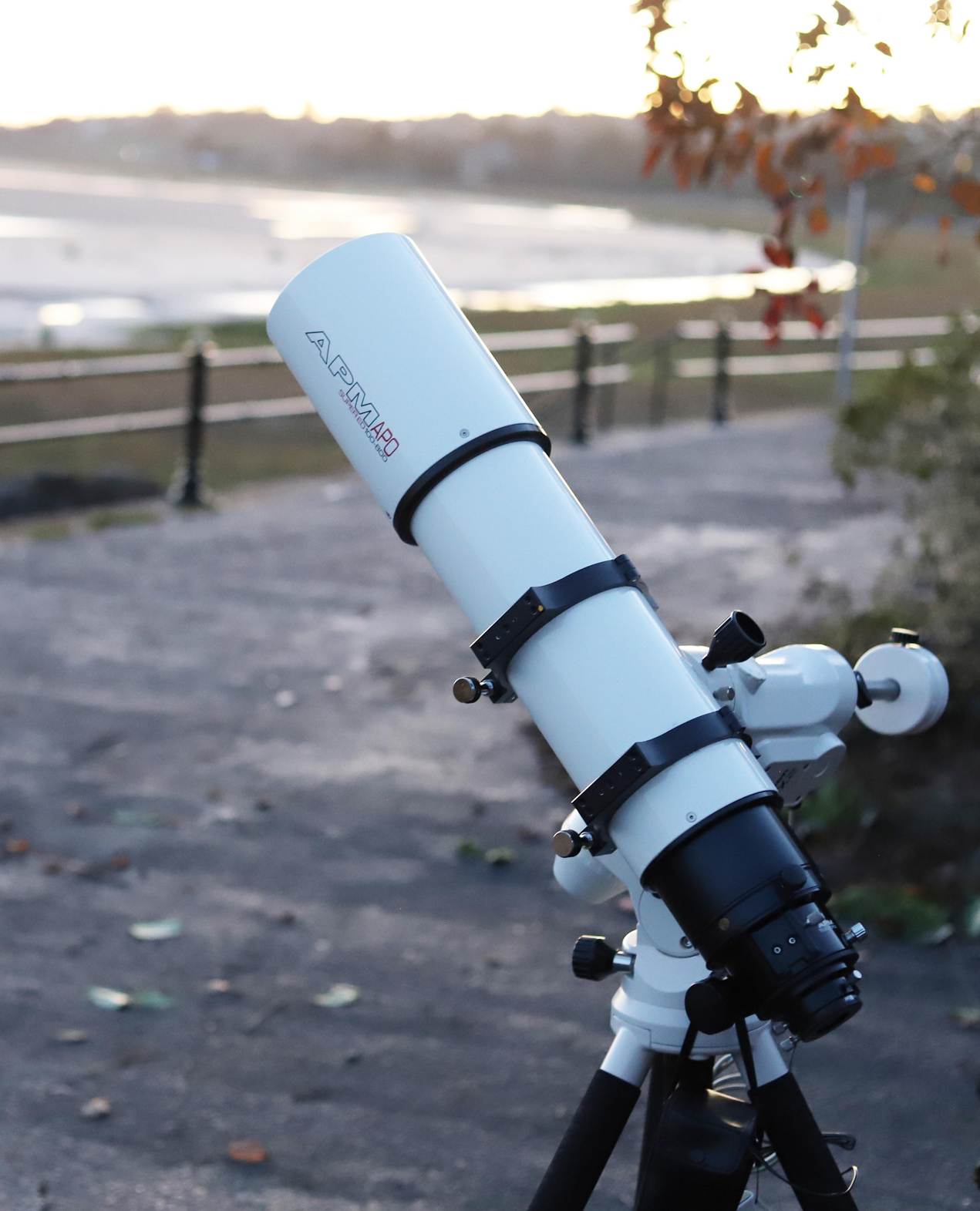
An LZOS
100mm F8 triplet (in the form of the earlier but similar TMB 100/800) was my
first foray into high-end apochromats, over twenty years ago. Back then, the
TMB 100/800 astonished me with its optical quality – one of the few
refractors with zero false-colour, visually at least.
I’ve
reviewed a lot of high-end refractors since then, from the likes of Takahashi
and Astro Physics, some with more modern designs and materials. So how does a
more recent version of the 100/800 (now under APM’s own brand) stand up?
Let's find out …
At A Glance
|
Telescope |
TMB (LZOS)
100/800 |
|
Aperture |
100mm |
|
Focal Length |
800mm |
|
Focal Ratio |
F8 |
|
Length |
670mm
dewshield retracted |
|
Weight |
5.4 Kg w/o
rings |
Data from me.
Design and Build
APM telescopes (sadly now defunct) sold
LZOS lenses in a variety of tubes. Most of the ones I see for sale and review
are in a ‘lightweight’ tube like my original 100/800. This 100/800
is in a heavy-duty OTA with a bigger focuser – a rarer, more expensive
and heavier option.
LZOS
The acronym LZOS stands for “Lytkarino Zavod Optychisovo Sticklo”, which roughly translates to “Lytkarino Optical Glass Works”. LZOS was set up in Soviet times to make high-end optics for military and research purposes and has produced some of the world’s larger professional telescopes. They used to make the lenses for Zeiss. LZOS manufactures (as you might guess) its own glass – a key advantage when it comes to making APOs.
LZOS lenses have appeared in various brands over the years, with OTAs like this one from APM telescopes being the most prominent. A very similar objective was once marketed under the ‘TMB’ brand after Thomas Back who designed it.
In general, LZOS objectives are always among the very best in their class in terms of fabrication quality and correction. But the cells are typically heavy, an area where Astro Physics (for example) often has an advantage.
Optics
The 100/800 is a 100mm F8 triplet with a central ED
crown of LZOS’ own, likely ‘OK4’. The lens is mounted in a
very finely made cell and has excellent coatings.
These lenses come with a test certificate that
details the figure and spherical aberration of the lens as tested on a Zygo
interferometer. All LZOS lenses are certified higher than 95% Strehl, but this
one is a special anniversary objective, with a Strehl of 98% Is the difference
between 95% and 98% visible? I suspect not, but as they say, ‘you can
never be disappointed with the best’.
Like all
LZOS lenses, this is an air-spaced design with three ‘foil’
(actually thin slivers of lead, I suspect) spacers. These are partially
shielded so don’t cause the spikes in images that some do.
The lens
cell design is the same as my 115/805 (lacking the rear retaining ring and
shims of the 175 and 130/F9 models I’ve reviewed). The glasses are not
the same, however, as you can see from the laser test. The rear flints in the
two designs are clearly different and the crown may be too. Note that the laser
test really only proves two glasses are different. It’s possible that two
different glasses could exhibit similar scatter.
The
coatings are also different, perhaps because this 100/800 is a later example
than the 115/805.
Another
difference is that the 100/800 lens ring has push-pull collimation screws. The
115/805 has fixed collimation. This may be a feature of the premium (as opposed
to the lightweight) OTA.
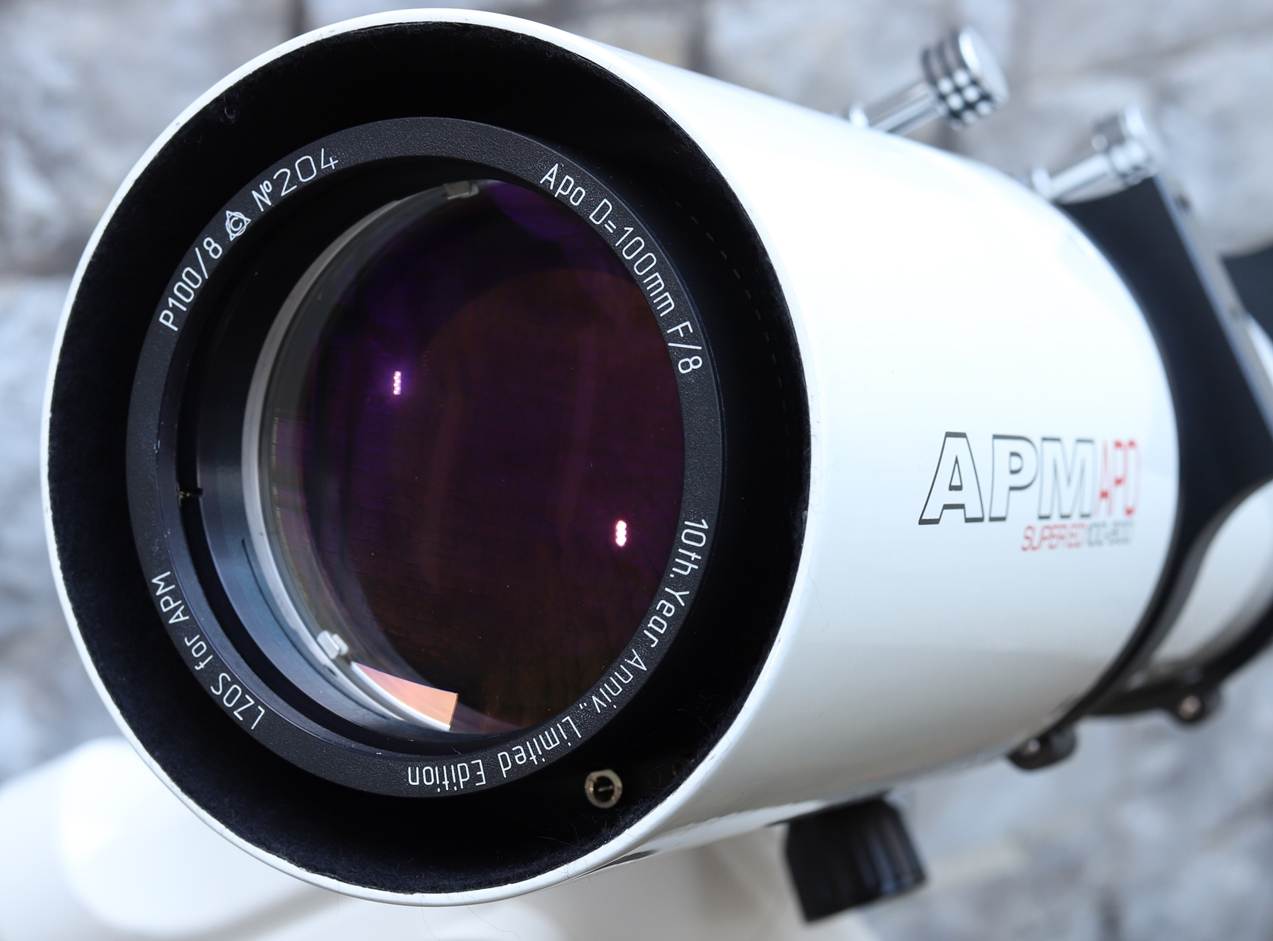
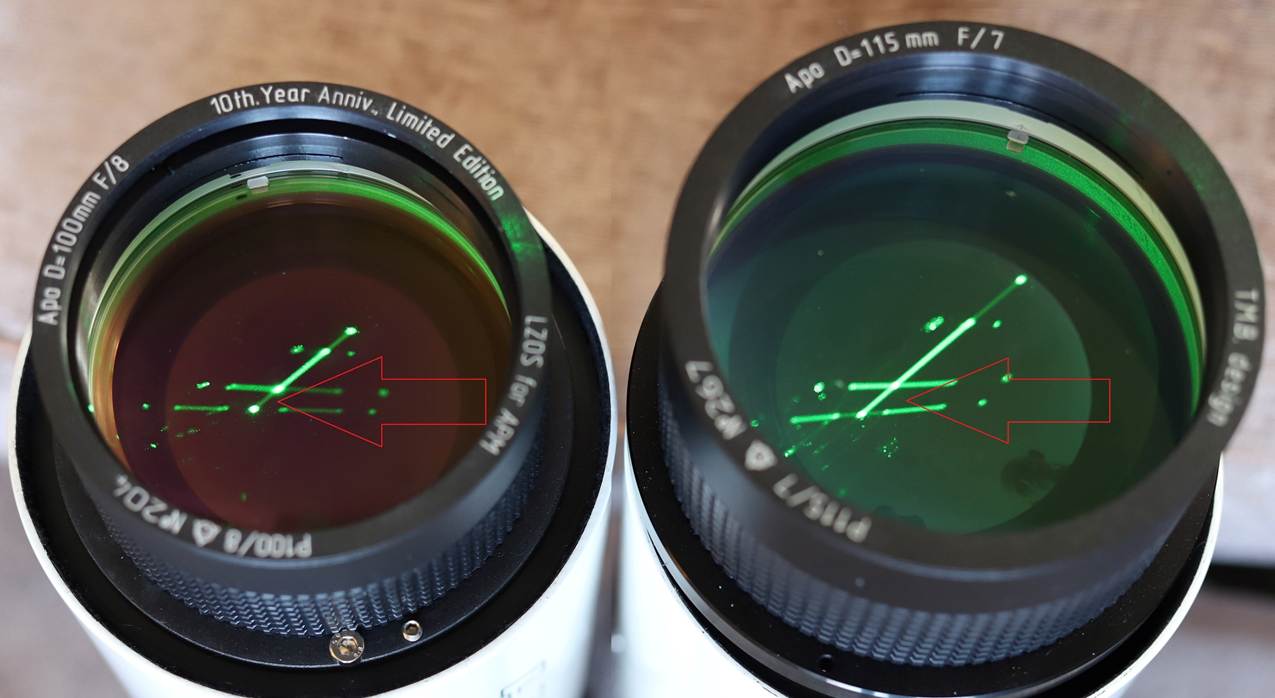
NOTE: the rear flints (and possibly the centre
crown too) are different. Note too the collimation screws on the 100/800.
Tube
Most of the APM/TMB scopes I see for
sale are in the ‘lightweight’ tube that features an extending
drawtube to keep the length and weight down.
This 100/800 is in a heavy-duty OTA
that ditches the drawtube and employs a larger focuser suited to imaging with
heavy cameras and accessories.
This
means the 100/800 on test is actually longer than my 115/805 in a lightweight
tube! Like the 115/805, the tube is 5.25” diameter (the rings are
interchangeable between the two scopes).
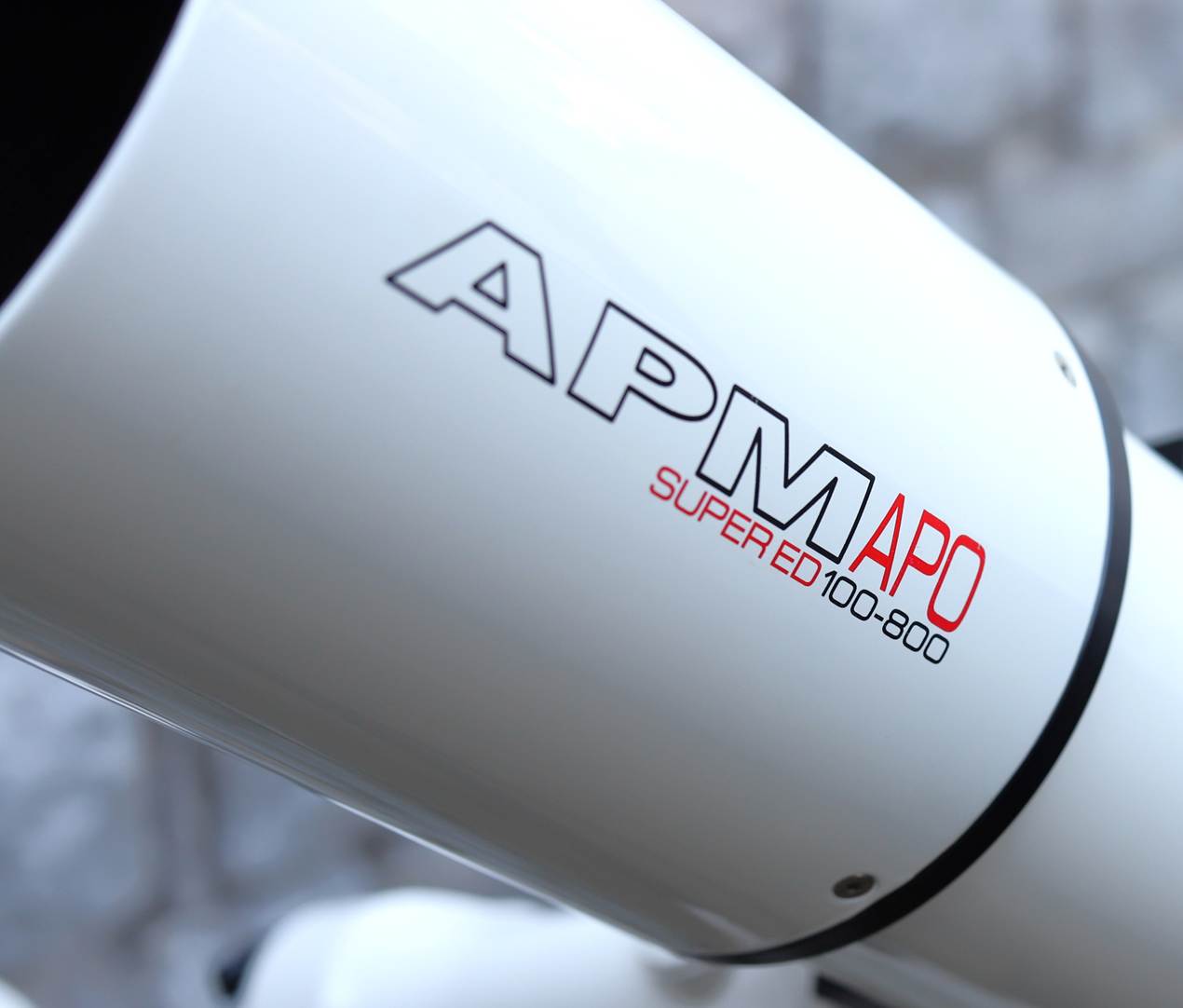
The tube is
nicely finished in gloss white as usual, with the (in this case, oddly long)
focuser adapter and sliding dewshield ring in machined and black-anodised
aluminium.
The sliding
dewshield and back are secured with screws, not threads, but in these premium
OTAs they are flush, rather than the dome-headed screws used on the lightweight
models. The tube is likely made from Krupax, a phenolic resin impregnated
composite, not aluminium.
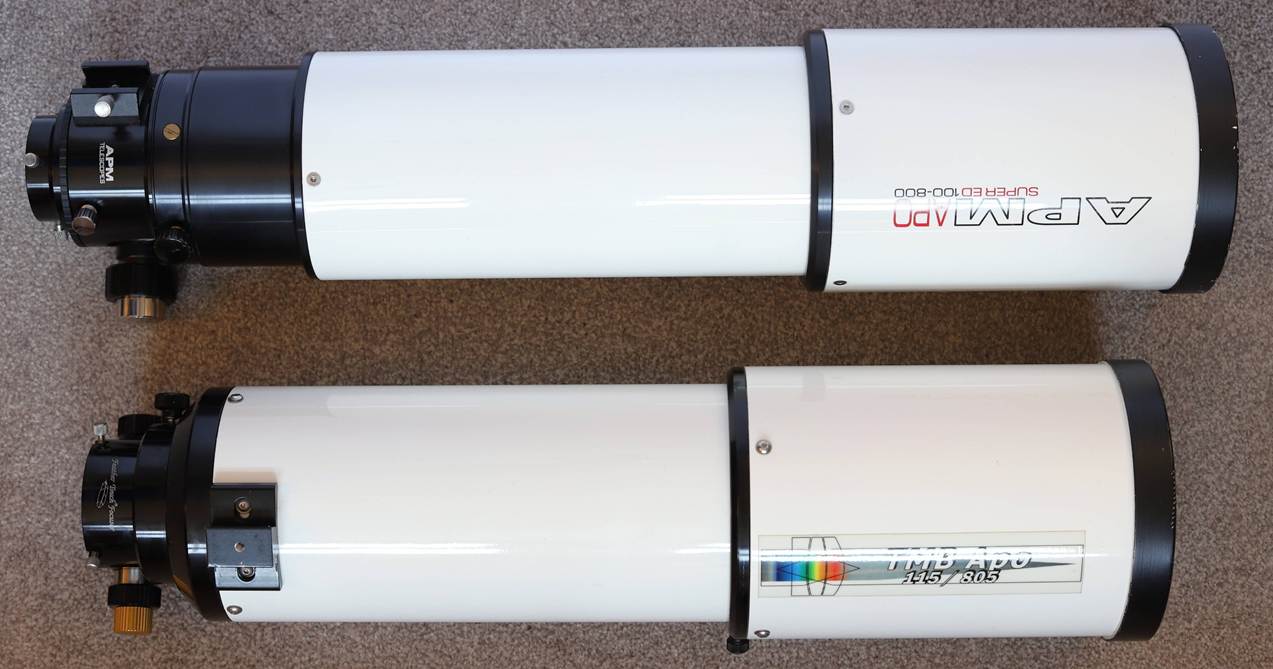
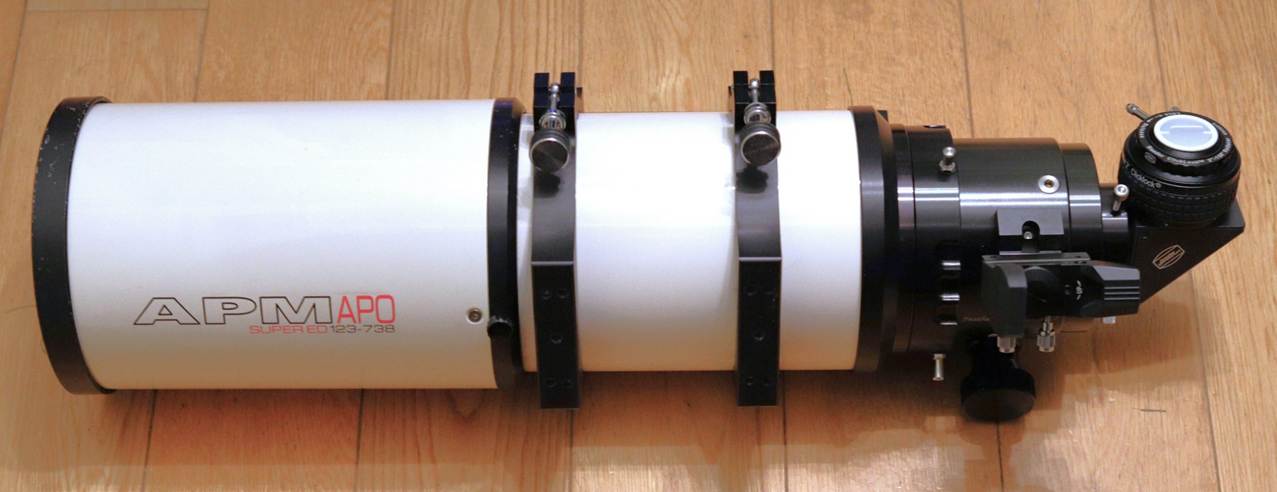
A premium
APM tube assembly with a 3.5” Starlight Instruments Feather Touch
focuser.
Focuser
The sliding tube in the lightweight
OTAs restricts the focuser to a small FeatherTouch or similar – usually a
2” Crayford. The premium HD OTAs like this one had larger rack-and-pinion
focusers. Often this was a 3” or 3.5” FeatherTouch from Starlight
Instruments.
In this
case, the focuser is an APM branded design, which brought the cost down a
bit, but is otherwise similar to an FT. It has a broad, fine-toothed rack like
an FT, a smooth dual-speed pinion and a 3” (75mm) drawtube with 110mm of
travel and a scale.
This
focuser is typical of a quality Chinese (I think) model, with slick machining
that doesn’t have the heavyweight ‘artisanal’ look and feel
of an FT. Internally, the drawtube is
ridge baffled to kill stray light, but it’s quite shallow compared
to an FT’s.
The focus
action is very precise with no discernible image shift. What appears to be a
lock on the drawtube is ineffective on this example. The pinion has a lock too
and fortunately it’s highly effective, at least up to a heavy
eyepiece or consumer camera.
Its only
real downside is a very stiff rotator which does cause some image shift and
needs a screwdriver to adjust tension, instead of thumbscrews or a threaded
collar.
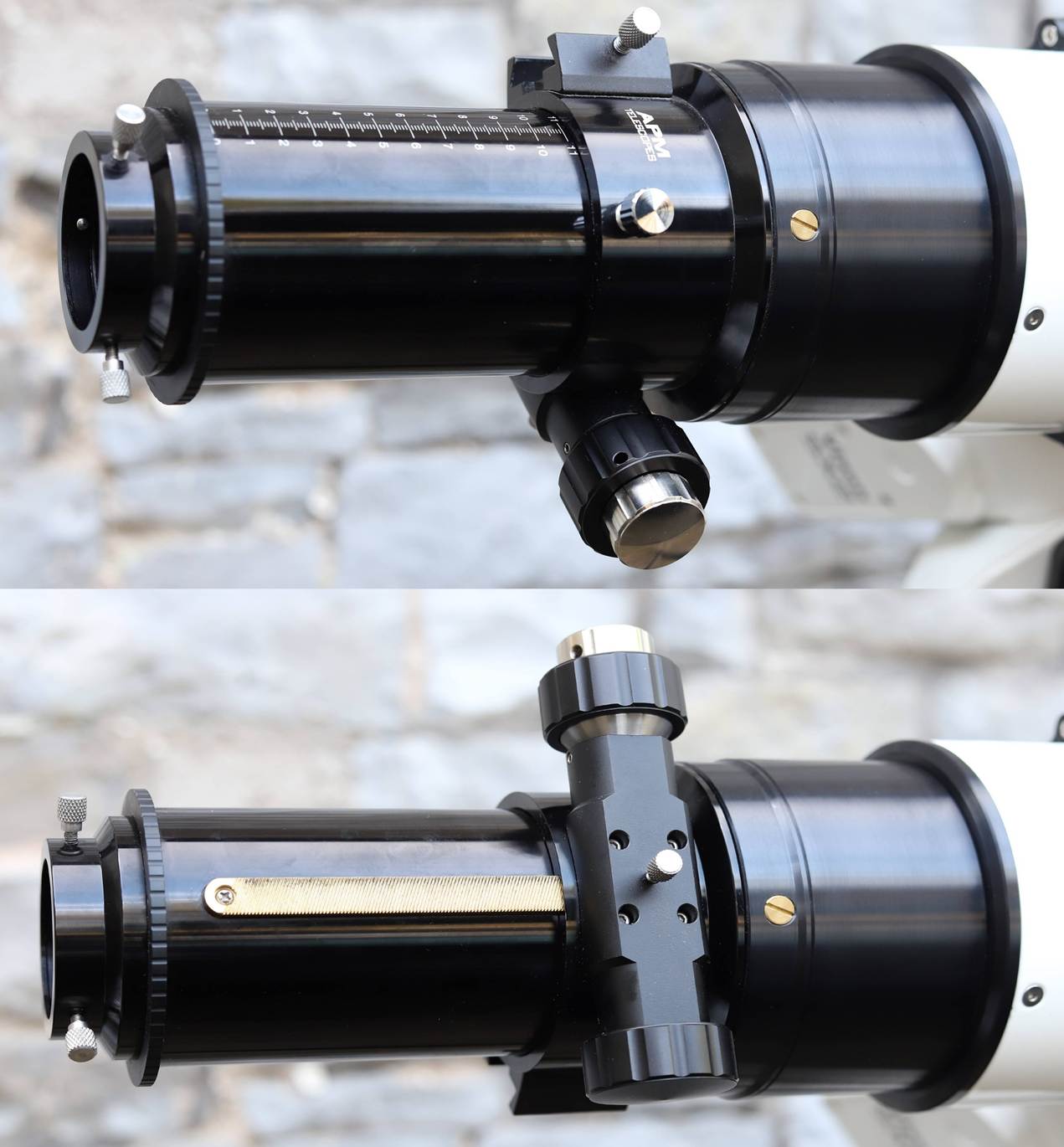
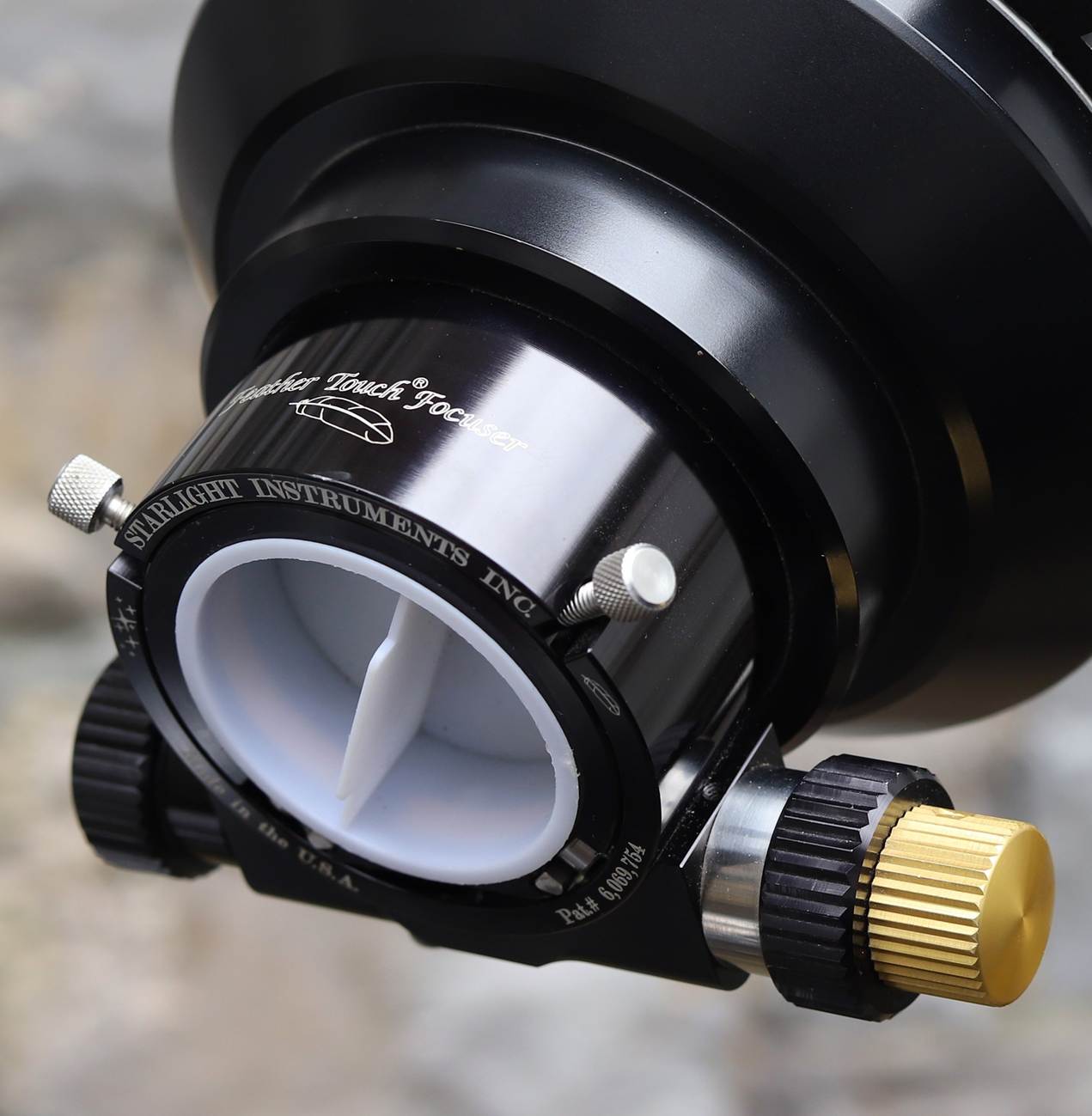
Example of the small Crayford Feather Touch fitted
to lightweight tubes.
Mounting
This is quite a
heavy OTA for a 4” refractor and it needs a medium-sized mount.
Accessories
This OTA came with
the usual APM CNC tube rings, 5.25” (just over 130mm) in diameter. The
rings are drilled to an Astro-Physics hole pattern that will take a variety of
plates, both Losmandy and Vixen.
In Use – Daytime
Just as I
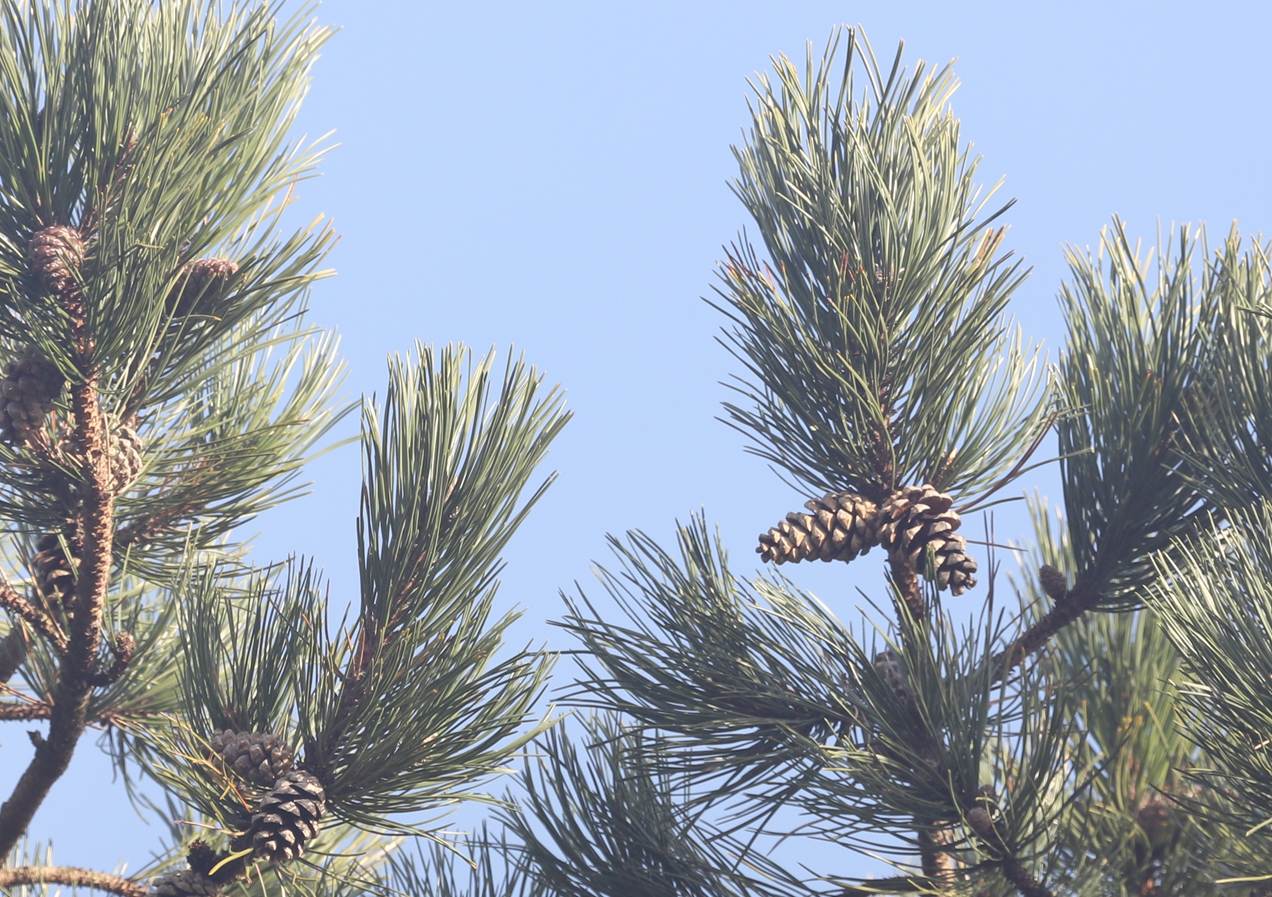
remembered from my original TMB 100/800, there is no visible false colour
fringing that I could find when viewing branches in silhouette, even at 160x.
There is no false colour fringing visible in the one-stop over-exposed image
either:
In Use – Astrophotography
There is
so much focuser travel that an extension tube isn’t required with my
DSLR. The focuser is quite stable enough for a large consumer camera or medium
CCD, but the ineffective drawtube lock would limit its use with really heavy
gear.
My usual
test snap of the Pleiades shows low levels of violet bloat and nicely tight
star images with very similar correction to the FC-100DZ, a 100mm F8 fluorite
doublet with an exotic flint. Typical of LZOS triplets, the 100/800’s
native field curvature is quite good, though you’d need a flattener or
post-processing for serious imaging. Star images are cleaner than many
foil-spaced designs, but not quite as clean as lenses with annular spacers.
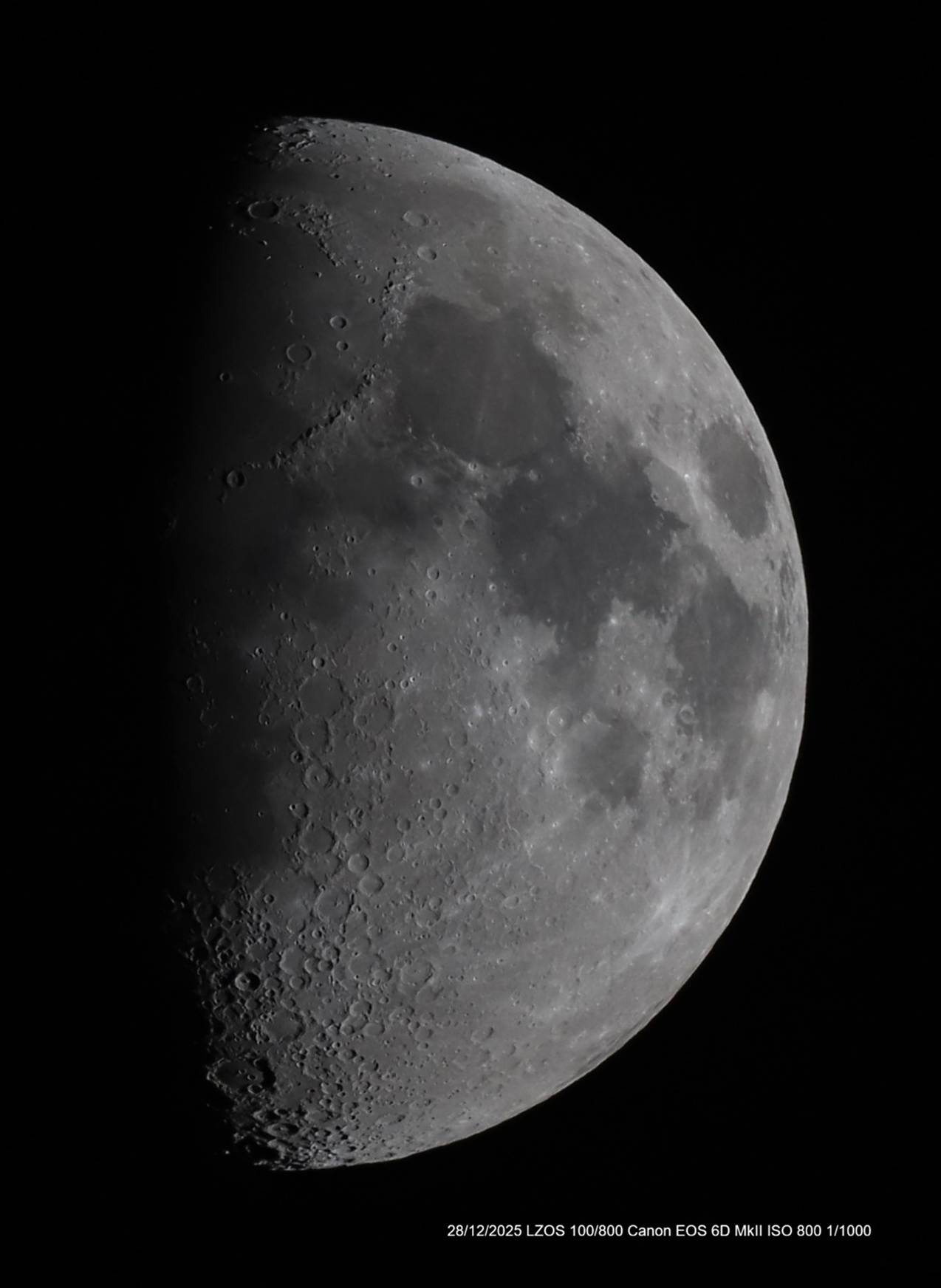
The 100/800 takes a very fine image of the Moon for
its modest image scale:
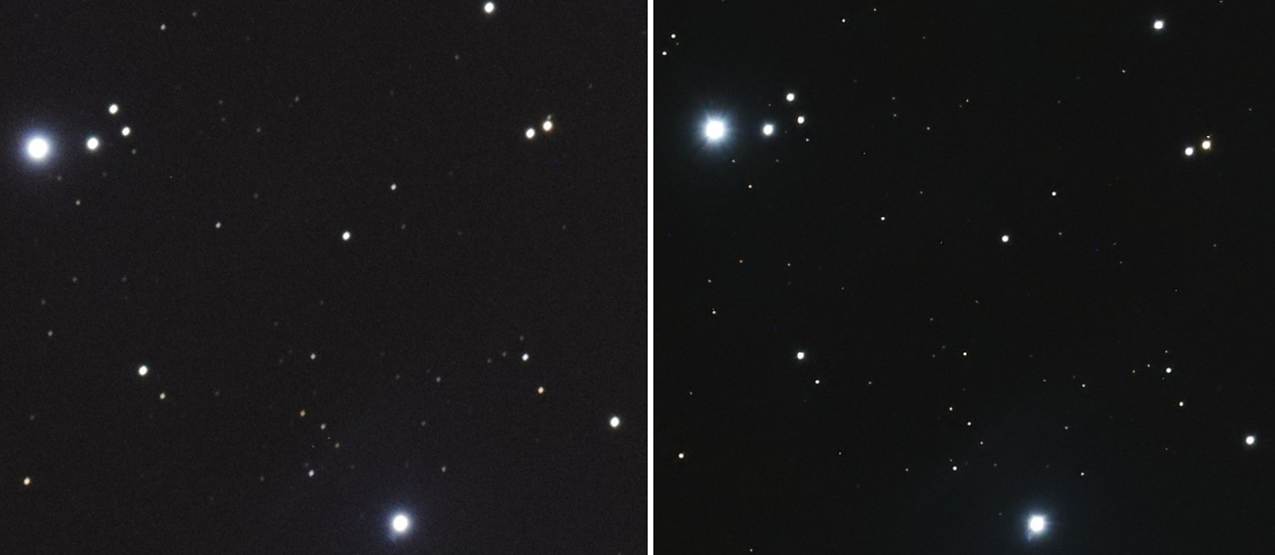
The Pleiades: 30s ISO3200, Takahashi FC-100DZ F8
(left), APM 100/800 F8 (right).
In Use – Observing the Night Sky
General Observing Notes
Despite
being heavier than some 4” refractors, the 100/800 is still easy to mount
and use, with an expansive maximum field-of-view, even though it’s an F8.
The focuser
is functionally very close to a 2.5 or 3” r&p FT, with no significant
backlash or image shift and loads of travel.
Cool Down
Typical of
triplets, cooldown is slow. On frosty night, it still shows under-correction in
star test long after the tube currents have stilled.
Star Test
Under-corrected
during cooldown, but perfect thereafter, with identical, evenly illuminated
rings either side of focus and a well-defined outer ring.
I noted
almost no false colour in the star test on Vega, even at 229x with a 3.5mm
eyepiece.
The Moon
A four-day
crescent was low in poor seeing over the bay, but the Earthshine picked out
against the dusk sky was a beautiful sight at low power. Then just after
Christmas I got lucky with some very stable seeing at first quarter. Now the
100/800 showed the outstanding lunar performance I recalled. The Hadley Rille,
slumped walls of Tycho and lots of detail on the floor of Clavius; dawn over
the rough terrain around Copernicus with 7mm and 5mm Naglers.
Surface
detail was completely free of false colour wash in the shadows and focusing
through the limb at high power was colour-free too. The 100/800 delivers that
hard black and icy white terminator I love.
Jupiter
With
Jupiter high in the sky on a night of good seeing, the 100/800 showed the kind
of surprising detail that a really excellent 4” APO can. A lot equatorial
cloud belt detail was on display, with thicker areas, whorls and a barge. The
Great Red Spot (nowadays a delicate pink at this aperture) was just appearing
around the limb. The polar hoods showed a lot of find shading and
micro-banding.
Another
surprise is that the Galilean moons reveal differences in size and colour.
At 160x,
there is no false colour, even focusing though, just a faint tint to the
out-of-focus blur: goldish one side, blueish the other.
Saturn
Saturn is
now emerging from its once-in-thirty-year ring closure. The seeing wasn’t
perfect, but the 100/800 still gave wonderful views at 160x with a 5mm Monocentric (my fave planetary EP).
The currently still narrow rings were easy to make out, the gap between rings
and planet the Cassini Division just visible. The cream planet showed its
darker greyish polar hoods and perhaps a cloud belt or two.
Of the
moons, Titan Rhea and Tethys were all visible.
Deep Sky
The
Pleiades are beautifully sparkly diamonds in mist, the Auriga clusters well
resolved into star dust due to its tight star images. I had good views of
galaxies M31 and M33 too.
The 100/800
gave me one of the best views of Epsilon-Lyrae (the Double Double) I’ve
had in a while – a perfectly clean split at 160x, with the Mag 6.0
component much more obviously fainter than usual. Fine refractors like this
throw most of the light from a star into the central Airy disk, making for
great double-star splitting.
Summary
The 100/800 remains a superb all-purpose 4” refractor that leans
towards visual use on the Moon and planets, but works perfectly for imaging
too. The only downside compared with a doublet is slower cool-down and a
heavier lens cell.
It offers slightly better correction than even the finest fluorite
doublets at this aperture, but with Takahashi’s more recent F8 FC-100DZ
that uses a special flint, that gap is very small, visually at least.
The LZOS 100/800 (whether TMB or APM
branded) remains one of the finest 4” apochromats ever made.