Canon 10x20 IS Review
Contents
In Use – Observing
the Night Sky
Canon 10x20IS vs
Swarovski 7x21 Curio
At A Glance
|
Magnification |
10x |
|
Objective
Size |
20mm |
|
Eye
Relief |
13.5mm
claimed (10-12mm measured) |
|
Actual
Field of View |
5.3
degrees |
|
Apparent
field of view |
49.5
degrees |
|
Close
focus |
~2.5m |
|
Length |
142mm |
|
Weight |
430g |
Data from Canon/me.
Design and Build
The Canon IS range
has no less than five different groups, though all share a similar design and
look:
·
A
newer range of 32mm models featuring a different type of IS derived from their
camera lenses, including a 10x32, a 12x32 and a 14x32
·
Older
8x25, 10x30 and 12x36 models, sharing a similar non-waterproof design. These
are light weight and fairly cheap. The 12x36s are a ScopeViews
Best Buy for astronomy.
·
Premium
10x42s which are fully waterproof, have special lenses and are intended to
compete with ‘alpha’ birding binoculars from the premium brands
·
Large,
high-power binoculars of semi-waterproof design, with ED lenses: 15x50 and
18x50
·
These
20mm-objective ‘pocket’ binoculars in 8x20 and 10x20 sizes
Body
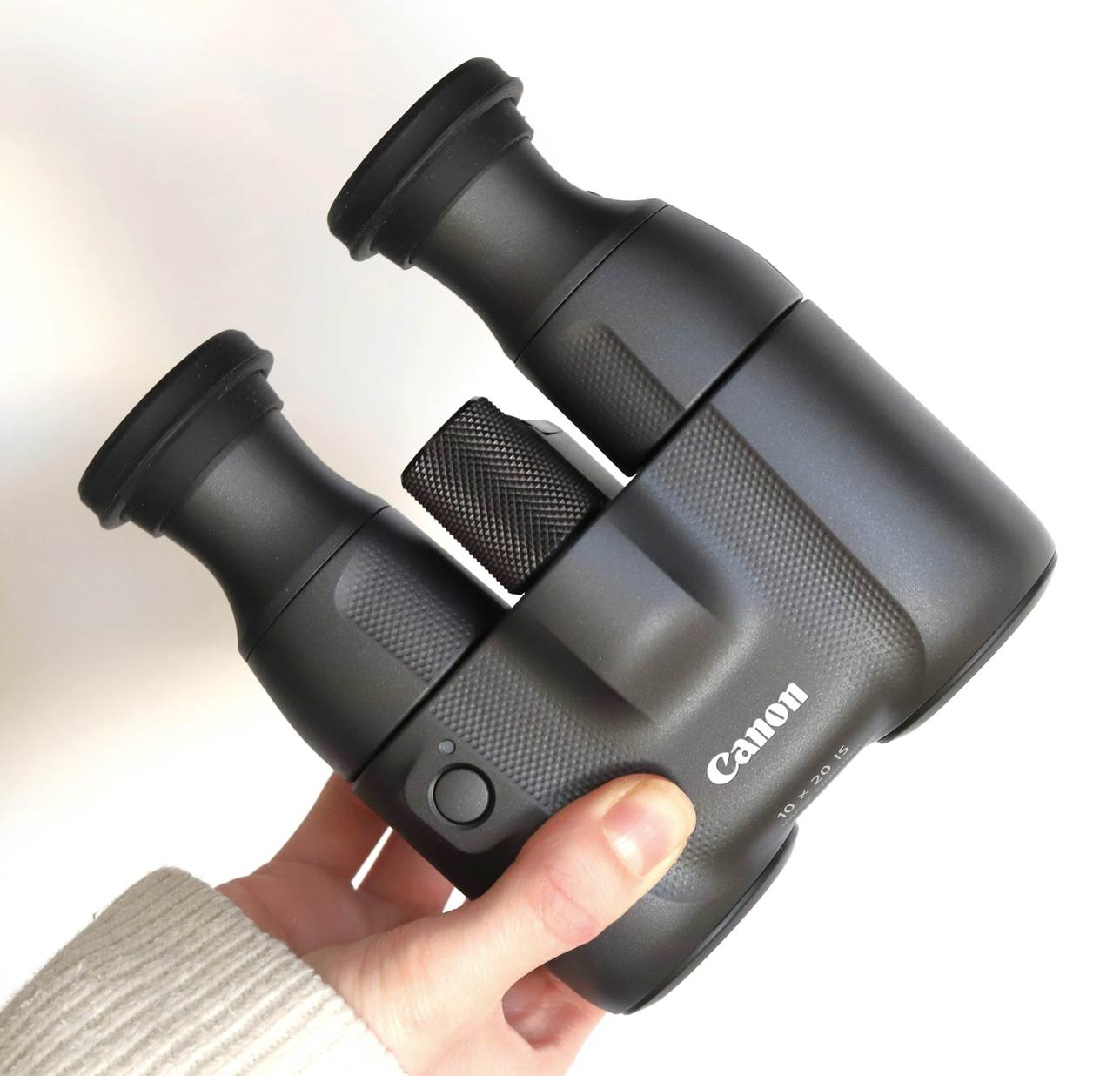
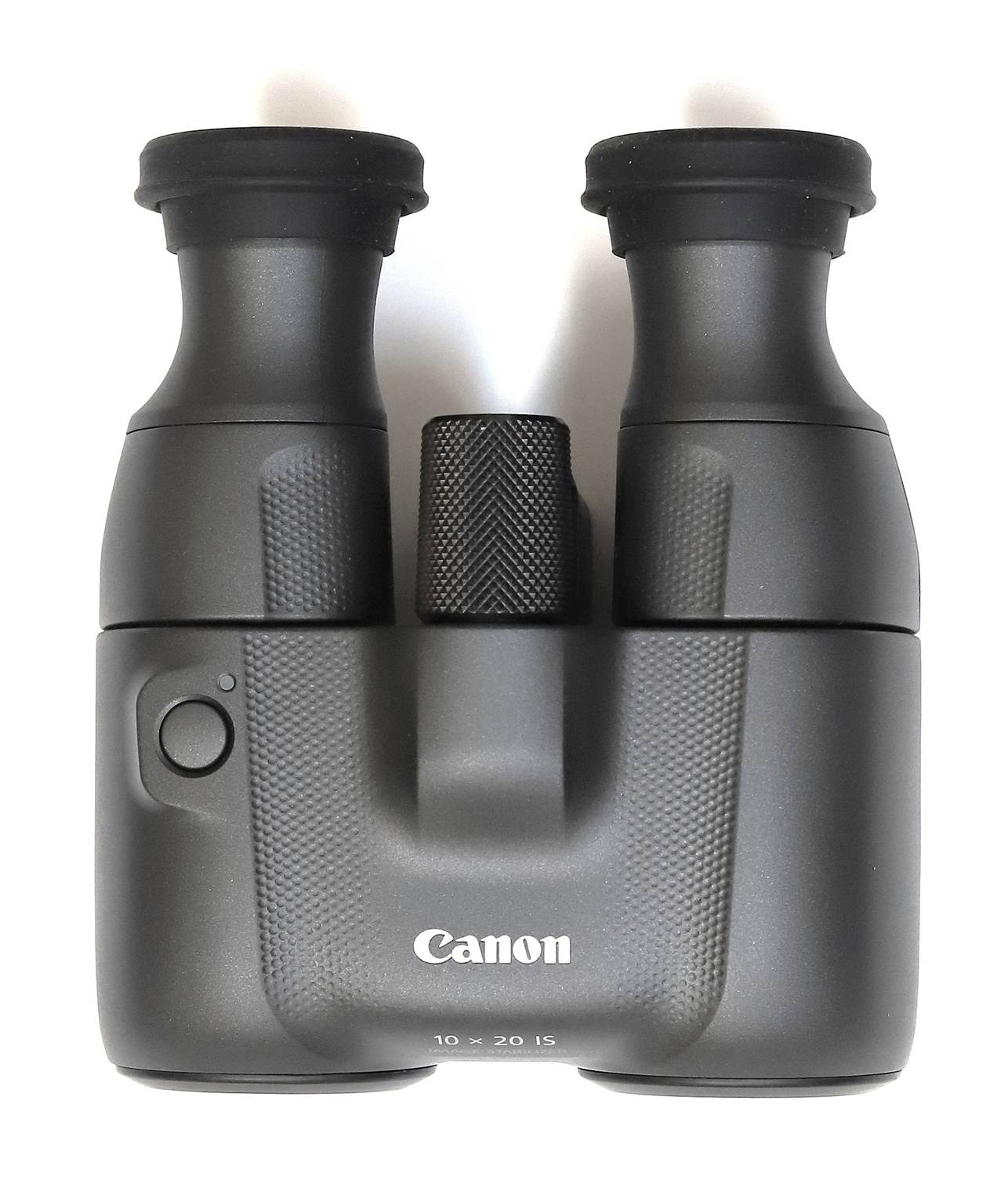
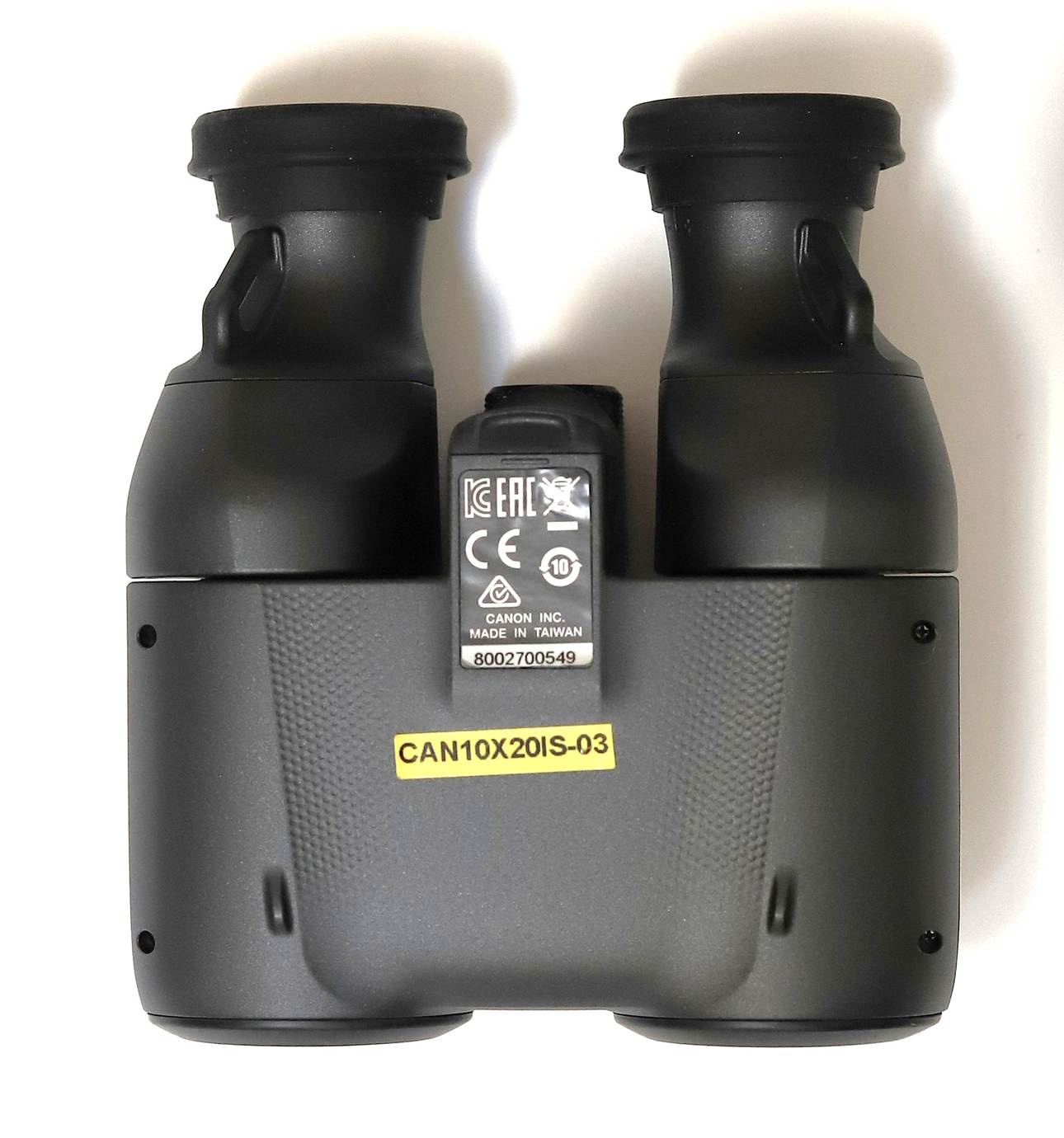
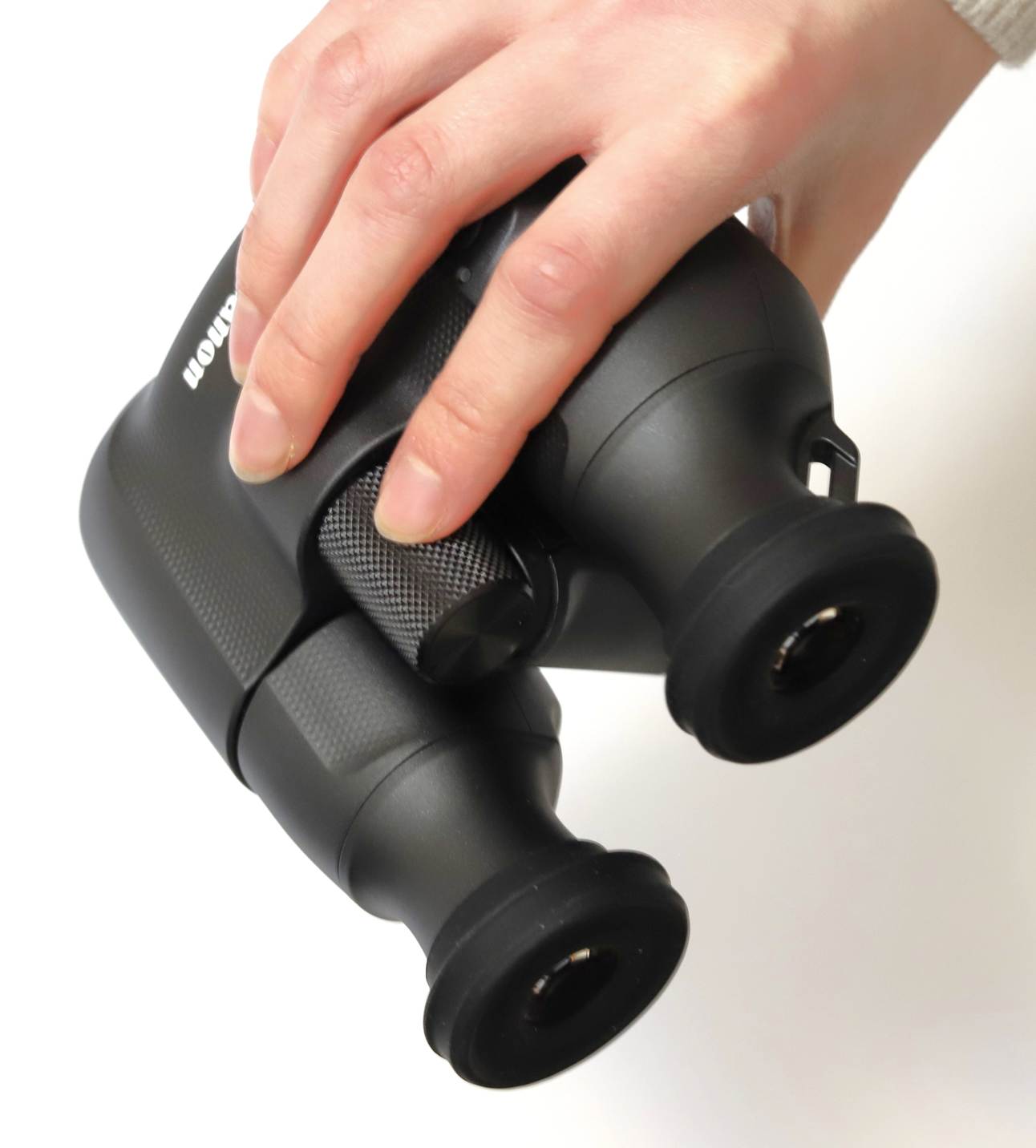
These 10x20s share
their body design and materials with other Canon models. Unlike most of the
larger Canon models I’ve reviewed, they are made in Taiwan, not Japan,
but build quality looks similarly good.
Instead of the
whole body pivoting to accommodate different eye spacing, just the eyepieces
pivot. The hinge-less plastic body has the appearance of an electronic gadget
– more like a camera than fine optics.
Canon make no
claims for water resistance. They are likely splash resistant, but
wouldn’t survive immersion or even a long day in the rain. For birding
this is a big disadvantage.
I’ve owned Canon IS binoculars for decades and they last well if handled carefully, but probably won’t be repairable like a pair of European ‘Alpha’ binos.
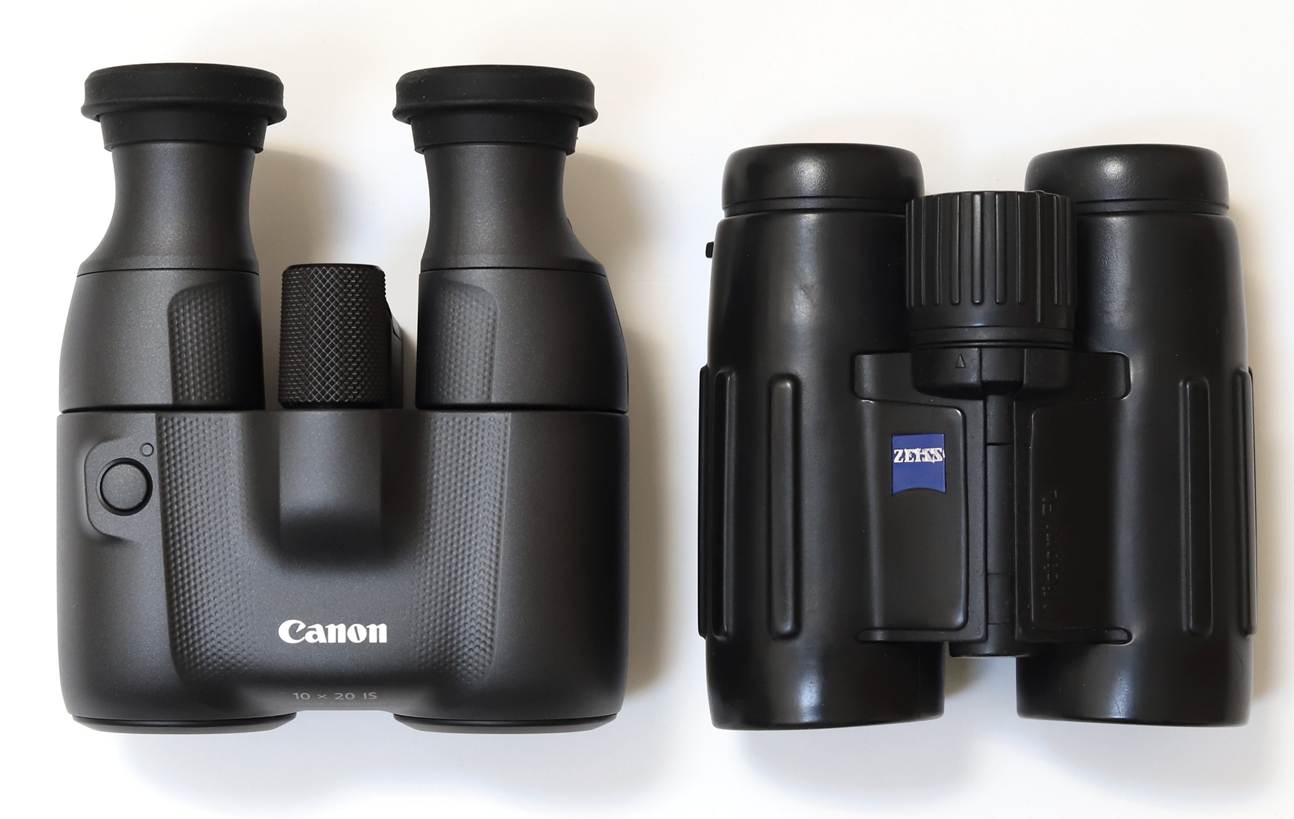
Canon claim a
weight of 430g. That makes them heavier (as well as larger) than a pair of
conventional pocket binoculars (shown next to a pair of Zeiss 8x32 FLs below
for comparison).
Focuser
Focusing
is achieved by moving the objectives as usual with Canons. The whole objective
assembly moves in and out as you focus, complete with a long external baffle to
kill stray light.
The
focuser action is fairly smooth, well-weighted and accurate, but it
doesn’t have the twirly fluid feel of the best.
Close
focus runs down to about 2.5 metres. That’s close enough to enjoy
butterflies and other insects, but I struggled to merge the image at that
distance. From there to infinity is about 1.5 turns, so focusing is quite fast.
To
adjust dioptre you just twist the right-hand eyepiece. The action is a little
stiff and harder to use than a central wheel.
Optics - Prisms
All Canon’s
IS binoculars use a type of porro-prism (not the roof prisms more commonly
found on high-end binos), but their design looks
nothing like other porros, partly because these are
Abbe-Porros (Porro II).
Porro
prisms have advantages over the roof prisms found in most modern birding
binoculars:
1) Porro prisms don’t
need mirror coatings, so they transmit more (and scatter less) light
2) Porro prisms don’t
need special phase coatings to deliver high resolution
3) Porros typically deliver tighter
star images with fewer ‘spikes’ than roofs, if astronomy is your
use case
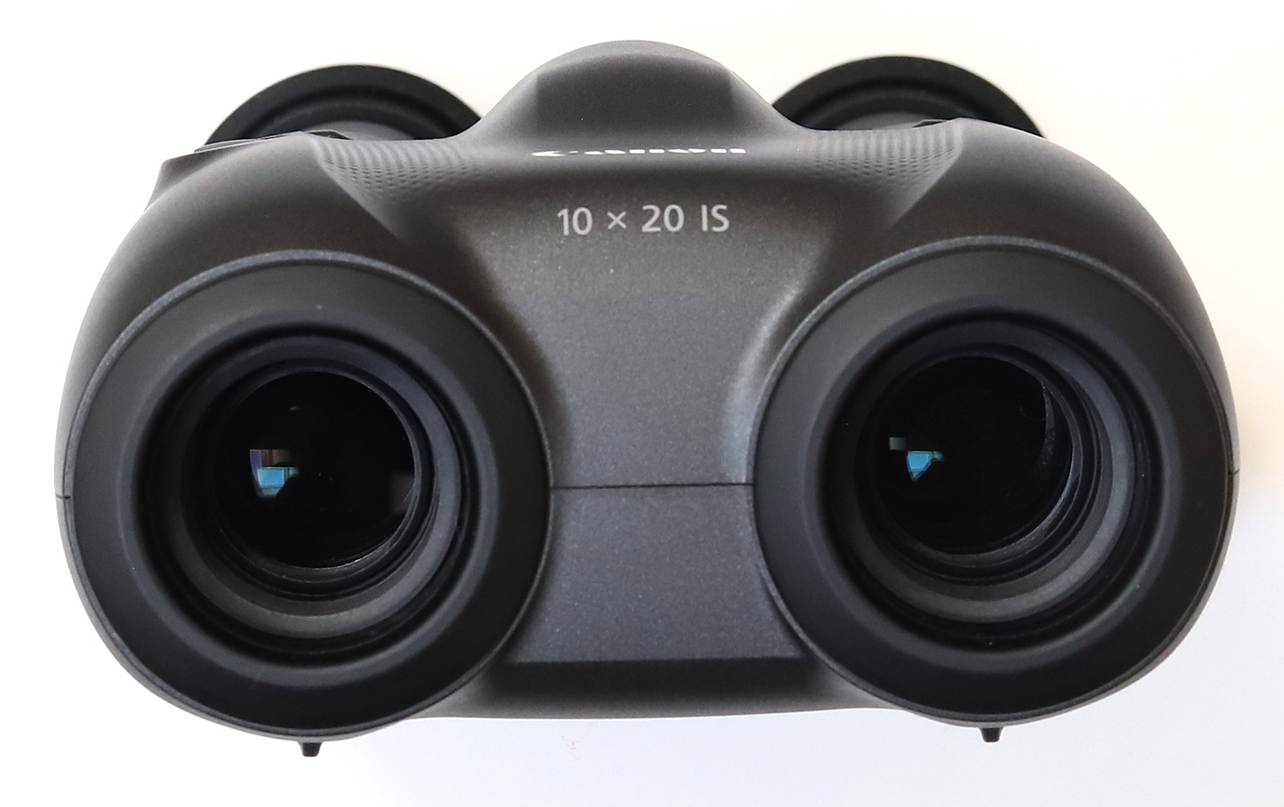
Optics - Objectives
These
have triplet objectives, but no ED glass. Small apertures and modest powers
don’t require ED glasses to reduce false colour fringing. Coatings are of
high quality as you’d expect from Canon.
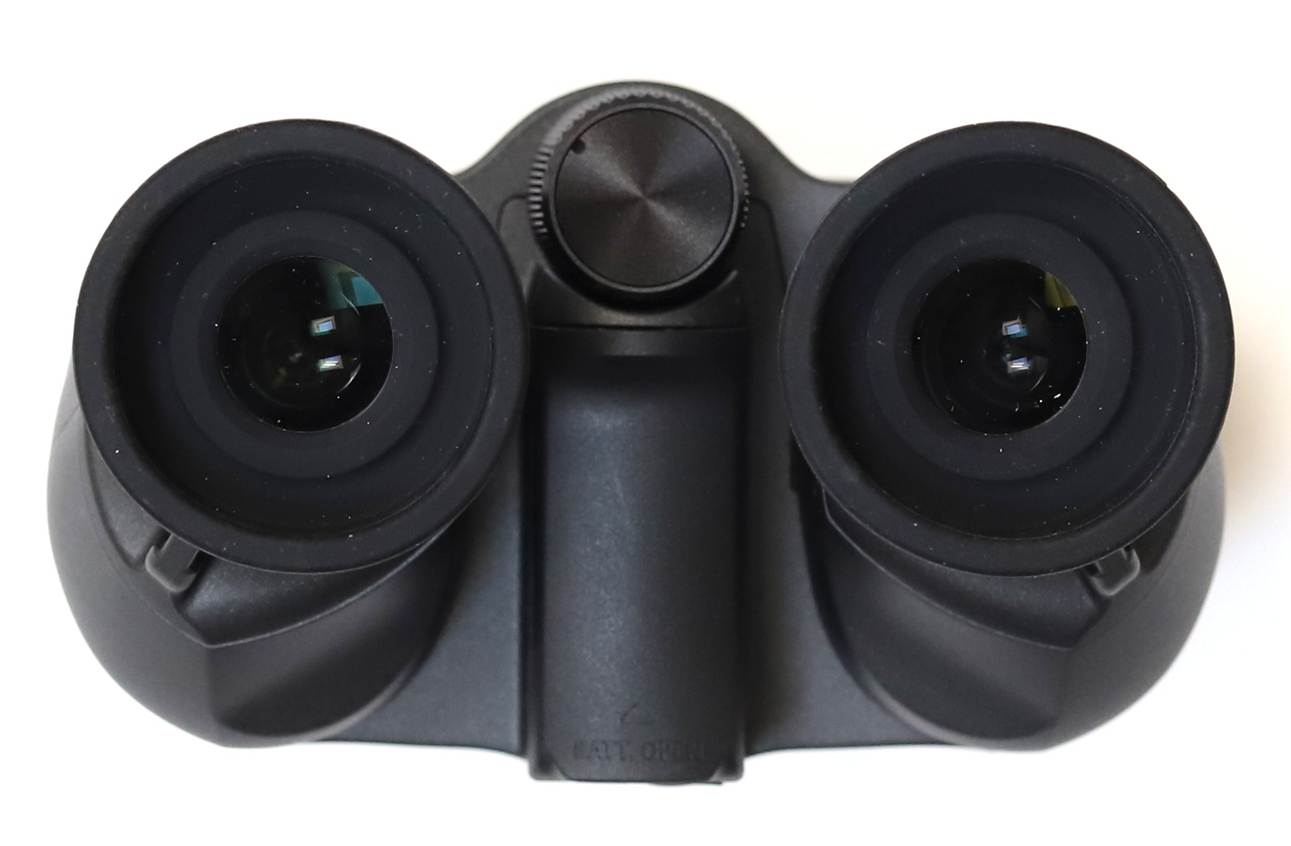
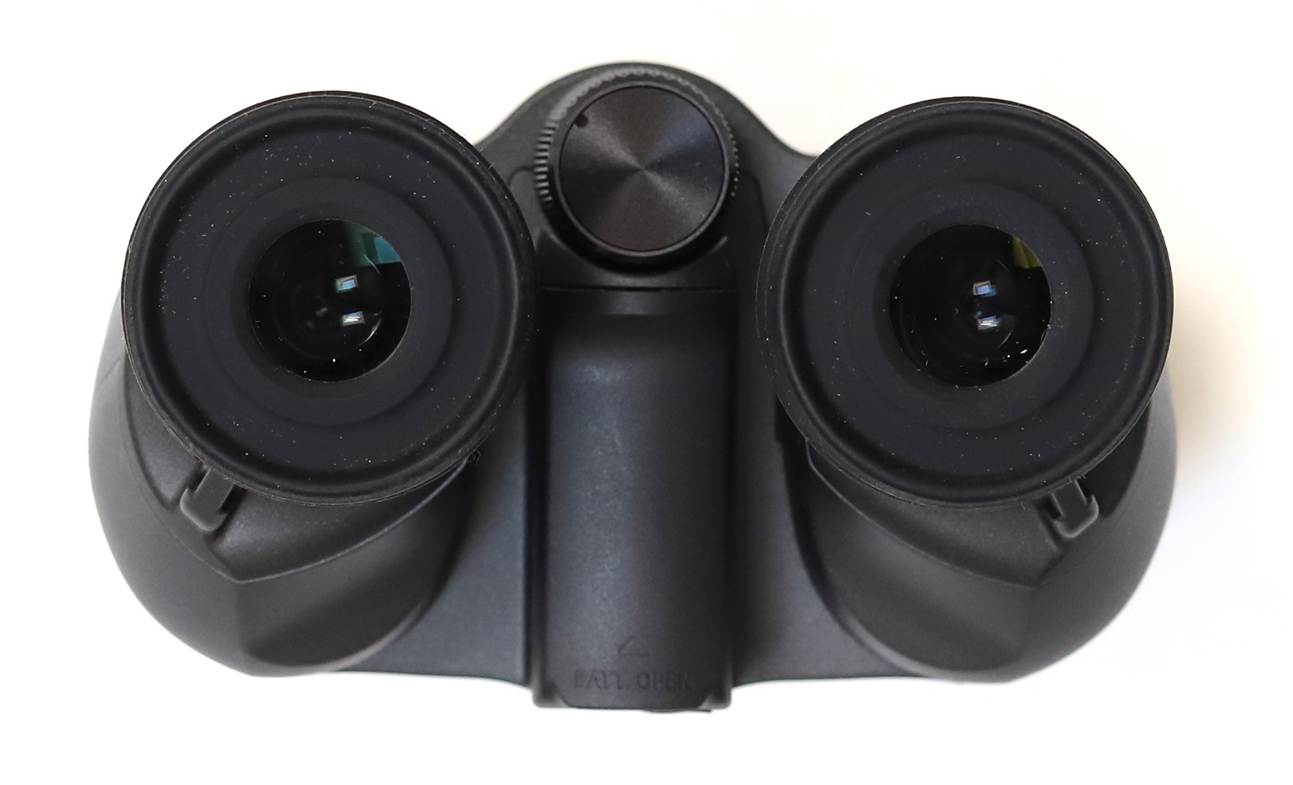
Optics - Eyepieces
These
have fairly a simple 4-element eyepiece design, but like most Canons they
incorporate effective field flatteners.
Canon
claim 13.5mm, but eye relief measures about 10-12mm from the rim of the cups
and that’s how it feels: just not enough if you view with your glasses
on.
I
dislike Canon’s folding rubber eyecups. It seems crazy you only get
modern twist-up cups on the premium 10x42 model.
The
rubber eyecups have just two positions. In most Canons these work fine, but not
here. Folded out, they constrict the field of view for naked eye use. Folded
in, they are still not really usable with glasses, but without glasses they are
too short, leading to kidney-beaning and false colour.
On
the plus side, they fold easily and the rubber seems thick and is likely to
wear well.
Typical
of small (and especially IS) binoculars, apparent field of view is quite narrow
at 49.5°.
Optics – Image Stabilisation
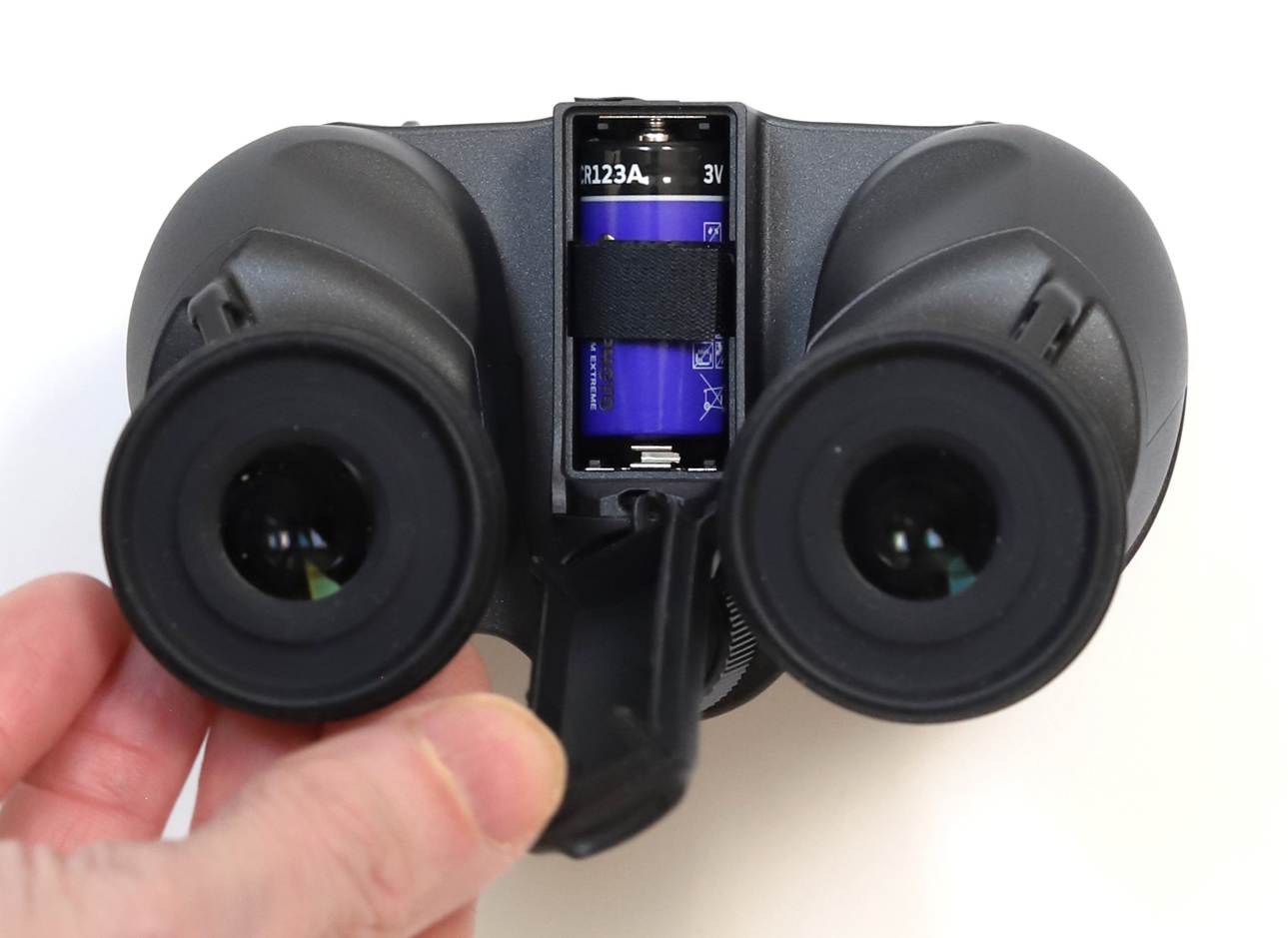
Most
Canon IS binos use a pair of AA cells that are widely
and cheaply available. For compactness, these 10x20s employ a tiny CR123A camera
battery that’s typically more expensive. Canon claim 12 hours of life in
use.
Accessories
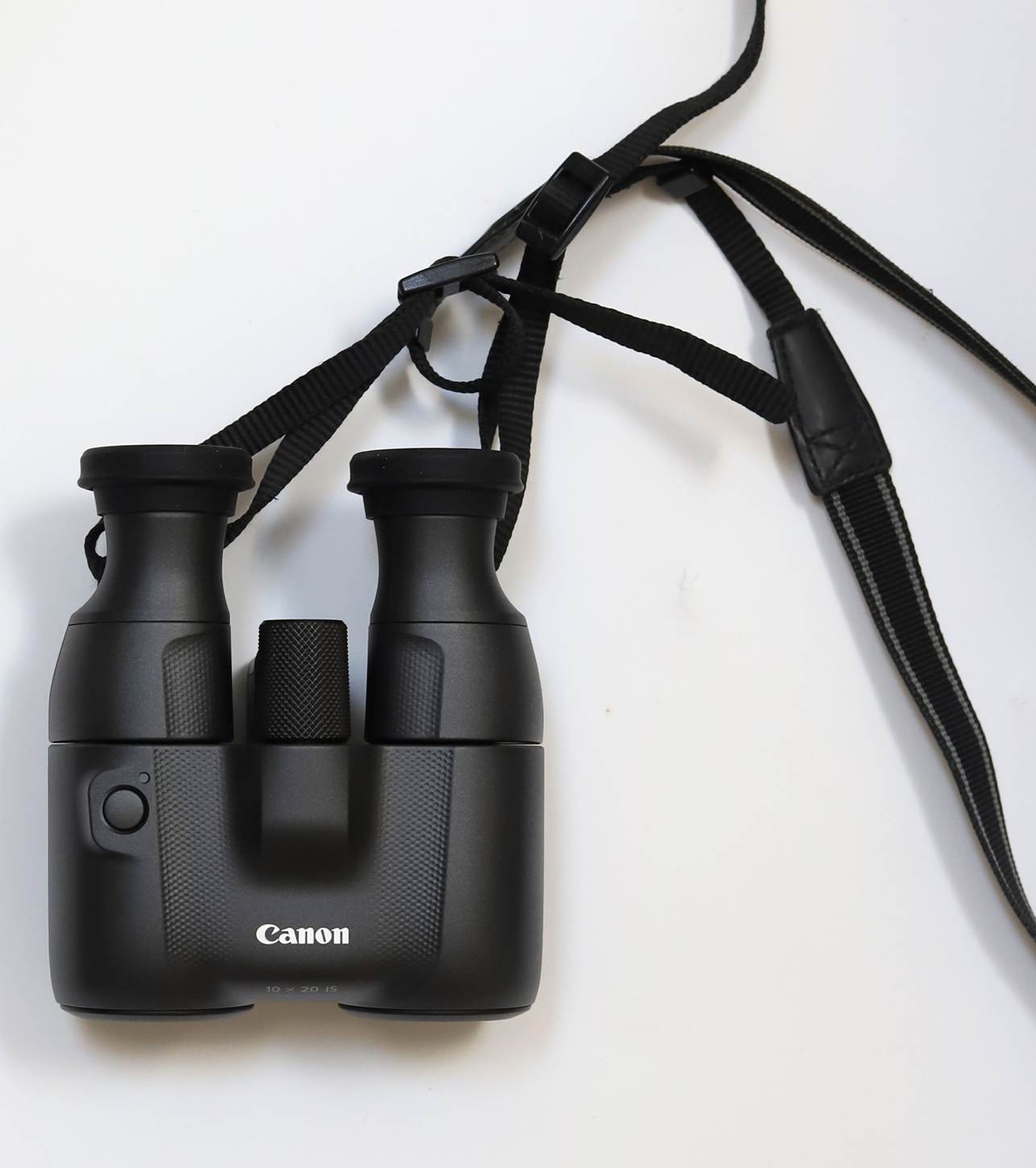
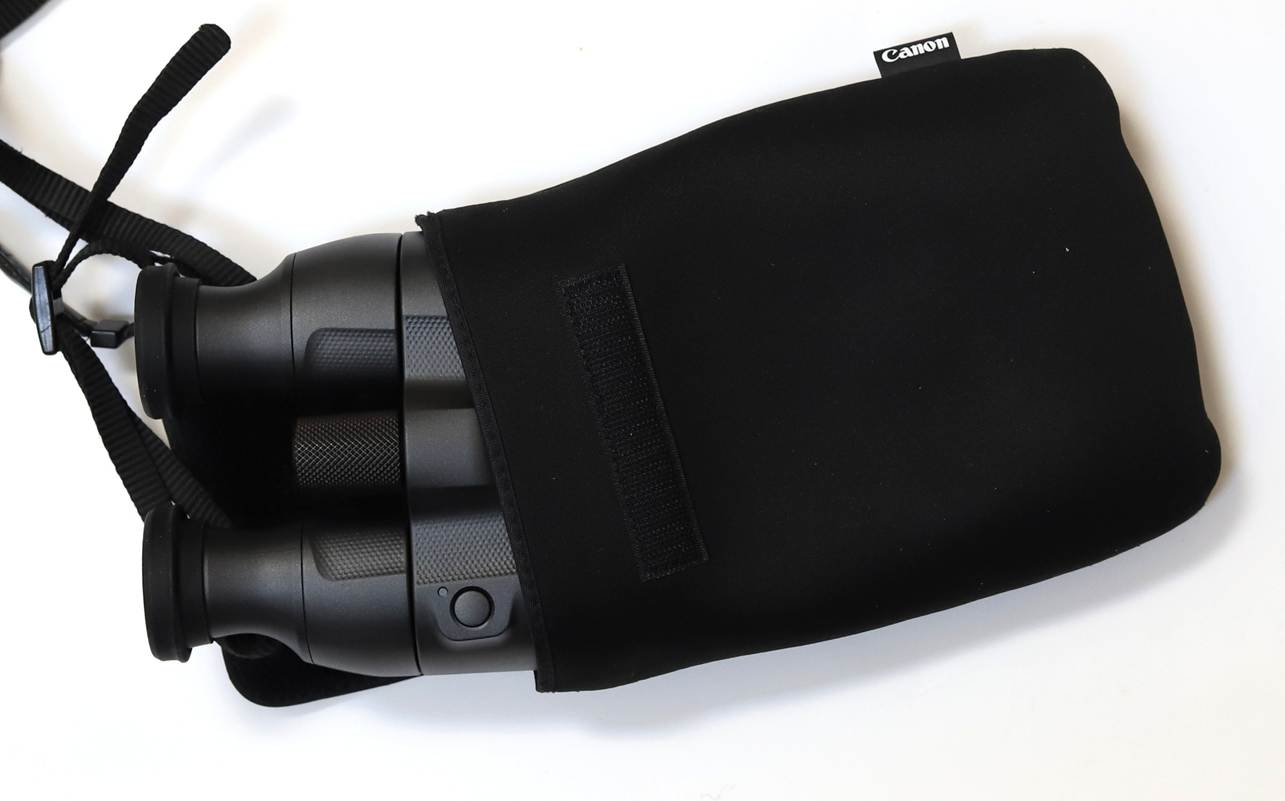
These
ship with a basic soft case and thin strap.
In Use – Daytime
Ergonomics and Handling
Small
and light, these are easy to carry and look unobtrusive when worn. Even so, you
might want to replace the strap with something padded for long carry days.
The
focuser wheel is large and falls nicely under a gloved finger, but the IS
button is difficult to find and operate with gloves.
My
only significant gripe is those eyecups. There just isn’t enough eye
relief to use with glasses. Even without glasses, I had issues. Folded back I
experienced blackouts and false colour. Folded out, the cups vignette the
field. Perhaps my eyes and sockets are atypical, but try before you buy.

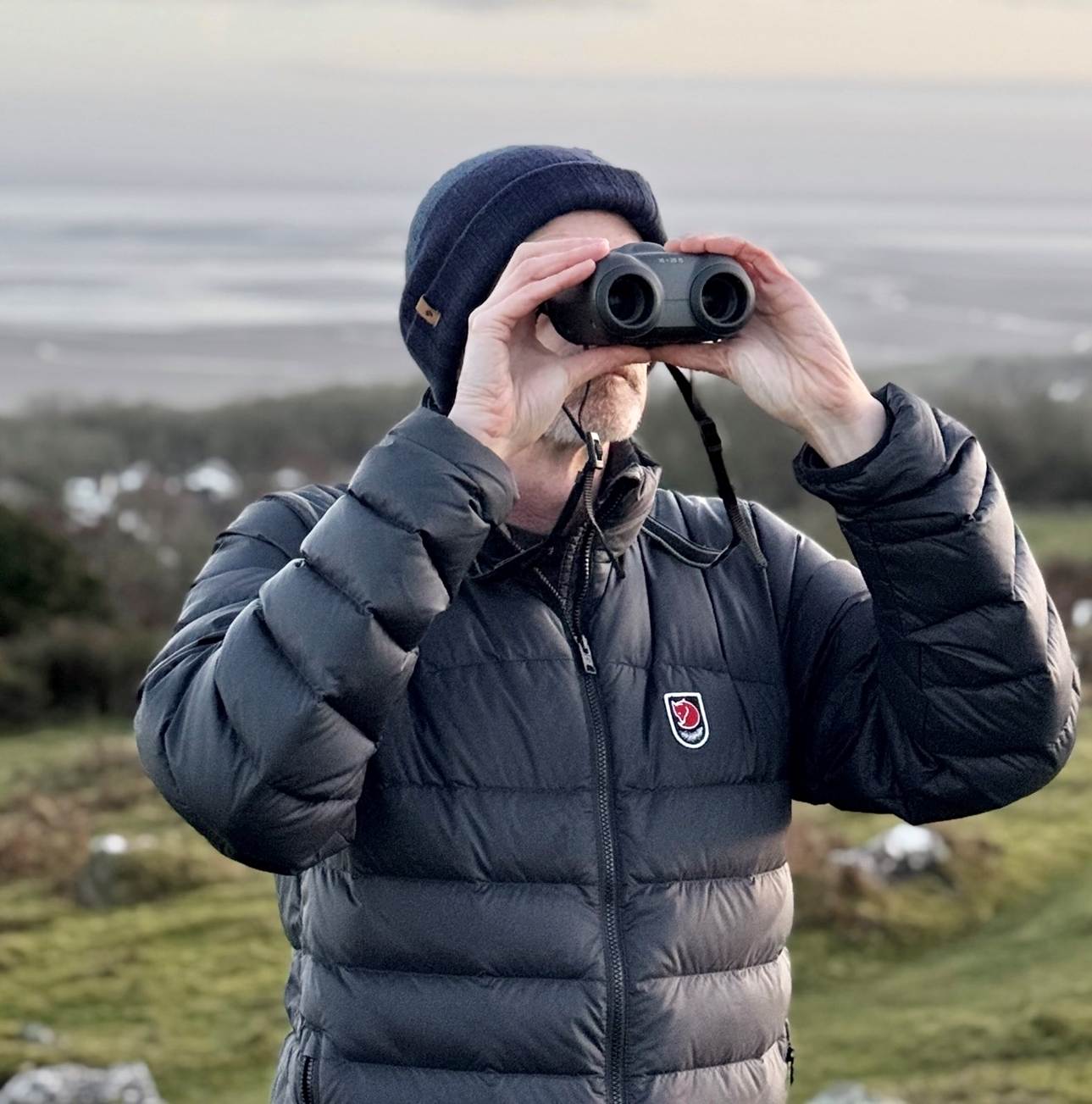
Image Stabilisation
Unlike
the 32mm models, these have only one stabilisation mode activated by a small
button on top. A long press keeps the stabilisation switched on until you
release it. This is tiring and makes it hard to use the focuser. A short press
leaves the IS enabled until you press again. This is much more convenient, but
it’s easy to forget to switch it off!
I found
the stabilisation works well, but I noticed a little more flicker and jerkiness
than some other Canons I’ve tried.
The View
The
view is surprisingly excellent. Surprising why?
Many
20mm bino’s are pretty awful – dim and fuzzy. These aren’t
like that at all. The daytime view is crisp and bright and sharp, with
excellent colour rendition.
A
magnification of just 10x is quite low by IS bino standards, but resolution is
outstanding. From my local Lakeland hilltop, I can easily read the time on
Cartmel Priory clock a mile distant. I feel like I could identify people I know
walking the village streets. Planes in the airway high overhead are easily
identified by type and airline. A tiny bird in a distant tree resolves to a
Christmas Robin when I press the magic button.
No
‘normal’ binocular will show you anything like this level of detail
unless you rest them on something to kill the shakes.
All
this goodness is due to the effective stabilisation, which is typical of Canon
and certainly no gimmick. But it does also speak to outstanding basic optical
quality too.
Like
most IS models, these have a fairly narrow apparent field of view. At 10x
magnification finding birds on the wing isn’t the challenge it can be
with Canon’s 18x50s. But it does mean the view feels more constricted
than many modern binoculars.
Flat field?
These have field
flattener lenses built in and by day the field appears flat to the edge. Only
when critically viewing a star can you see a trace of astigmatism in the last
20% or so.
Chromatic Aberration
There is some false
colour on high-contrast parts of the view, mostly from the eyepieces.
Stray Light and Ghosting
The objective lenses are
recessed deep within the barrels and there is no significant issue with veiling
flare, even when working around streetlights at night.
Viewing a bright LED
streetlight threw up no spikes and only a trace of ghosting – impressive.
In Use – Dusk
At
dusk, the limitations of a 20mm aperture become obvious. These just don’t
work into deep twilight the way Canon’s 10x30s do, for example.
In Use – Observing the Night Sky
The
stabilisation can be a bit jerky when panning through star fields, but works
well for static views.
The
field is flat – stars are nicely pinpoint and remain so almost to the
field stop, with just a trace of astigmatism at the very edge, as noted.
Star
images are very tight and notably lack the little spikes you often get with
roof prisms.
The Moon
The moon shows good,
crisp detail when the stabilisation settles. Some clear nights leading up to
first quarter showed the highlights, including good views of the Theophilus,
Cyrillus and Catherina crater group.
However, I struggled a
bit with focus shift when viewing the moon with IS enabled. I also noted a fair
bit of false colour on the moon, mostly from the eyepieces.
Planets
Jupiter showed a clean
disk with no spikes or significant flare. The Galilean moons were surprisingly easy
to spot (pocket binos often struggle to reveal them
at all).
Saturn revealed its
pinkish cream hue and oval shape.
Deep Sky
On a dark Christmas Eve
night with patchy cloud, I wandered down the prom’ and found most of the
winter deep sky highlights easily and enjoyably.
I quickly found M35 and
tracked up into Auriga, spotting M36, 37 and 38: just fuzzy blobs of differing
size, but easy to find.
M31 was very easy to find
too and I was surprised by its brightness and extent at this aperture.
The three main stars of
Orion’s belt very easily fitted in the field with no distortion. The
Orion nebula was surprisingly bright – revealing its central bright
spike, extended curving arms and dark cutoff with a little help from averted
vision.
The Pleiades
weren’t as sparkly as they are at bigger apertures, but an enjoyable view
nonetheless. The Double Cluster likewise wasn’t as populous as it is with
bigger bino’s, but easy to find and still enjoyable.
As
with other Canon IS binoculars I’ve reviewed, these punch above their
aperture for deep sky, due to the IS.
Canon 10x20IS vs Swarovski 7x21 Curio
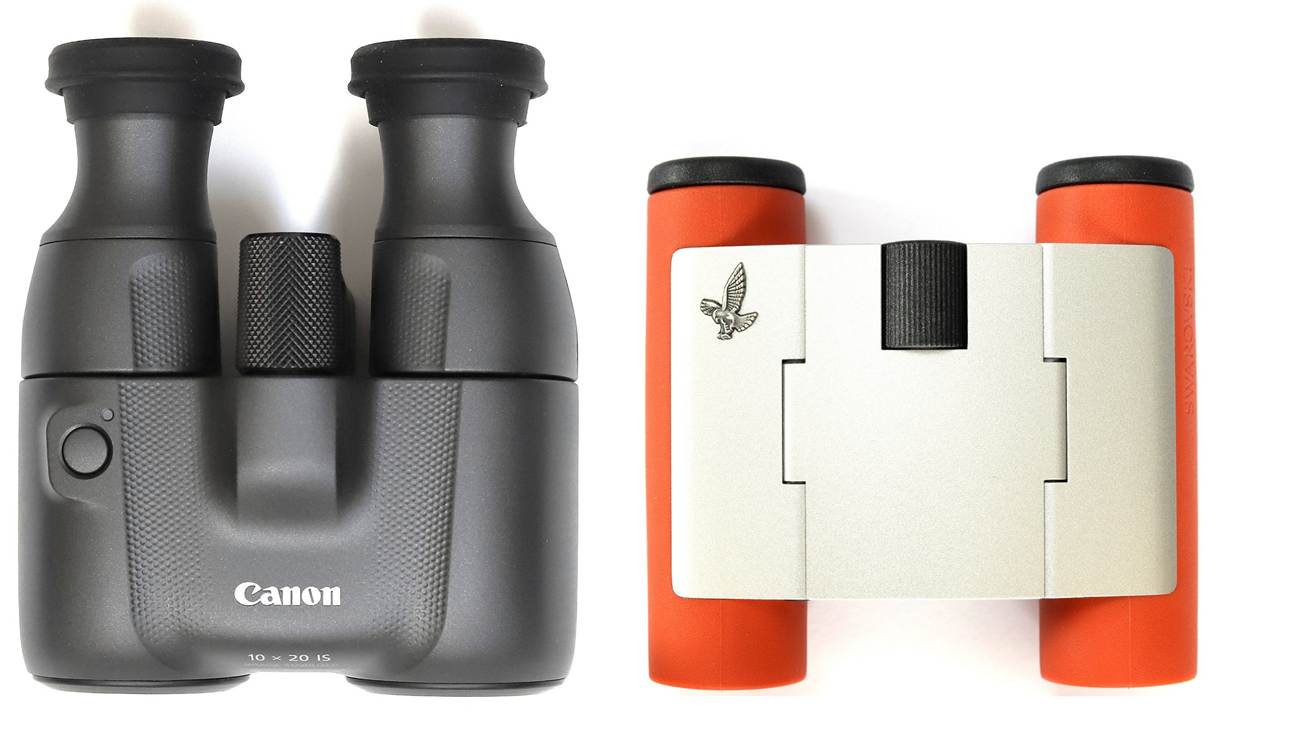
Swarovski’s
expensive Curios are my current favourite pocket bino. They have a wonderful,
bright sharp view, superb mechanicals, lots of eye relief for glasses wearers
with proper twist-up eye cups. They are fully waterproof, smaller and lighter
and optically better than the Canons in most respects. The Curios are made in
Austria and repairable (unlike almost any other bino in this class).
BUT
… If you want maximum resolution, then the little Canons will show you
more due to their stabilisation. This is true of almost every comparison like
this. A fine birding bino gives a wider more immersive, more beautiful view;
but IS simply reveals more detail.
Summary
Canon’s 10x20 IS pocket binoculars were better than I expected. Unlike many pocket binos, they work superbly with outstanding optics and good stabilisation.
As usual with Canon binos, their Achilles Heel is poor eye relief and eye cups. They probably aren’t suitable if you need to wear glasses to view. Their small objectives also limit their use in dusk conditions and for astronomy. If you don’t need the compact size, I would suggest the 10x30 model instead.
Build quality appears excellent and experience with other Canons suggests these should be rugged and last well. But they are not waterproof and would require careful use for birding.
If you want a
pocket-sized distance viewer with maximum resolution and you don’t need
full waterproofing, these are easy to recommend. But not if you wear glasses to
view.